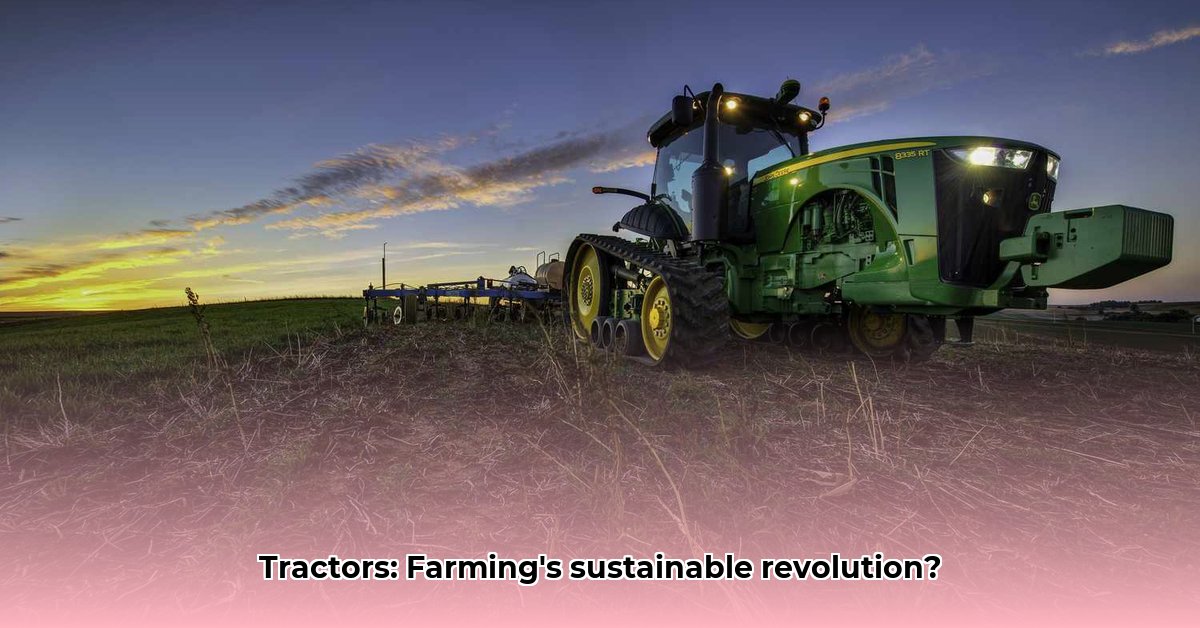
How Did the Tractor Help Agriculture?
The rumble of a tractor engine signifies a pivotal moment in human history – a sound that irrevocably altered the face of farming. But how, precisely, did this invention revolutionize agriculture? Before the widespread adoption of tractors, farming was a brutally labor-intensive process. Imagine tilling fields solely with horses or, even more arduous, relying on sheer human strength. Planting and harvesting were similarly grueling endeavors, often consuming weeks or months of backbreaking work, with yields heavily dependent on unpredictable weather and available manpower. How did this all change? For more on early tractor history, see early tractor models.
The Tractor's Amazing Rise: A Mechanical Marvel
Tractors fundamentally reshaped this paradigm. The ability to plow, plant, and harvest at significantly accelerated speeds meant a single farmer could cultivate substantially more land. Vast fields, previously unmanageable, suddenly became attainable. This mechanization wasn't merely about speed; it unlocked unprecedented potential for increased productivity. Larger farms emerged, transforming agricultural landscapes and leading to a dramatic increase in global food production. Food security, once a persistent concern for many, transitioned towards a more attainable reality. But what were the next steps in this impressive agricultural transformation?
Beyond the Plow: A Multi-Talented Machine
Early tractors were primarily designed for plowing, the foundational task of farming. However, innovation didn't stagnate. Modern tractors are versatile powerhouses, far surpassing their rudimentary predecessors. They're not limited to plowing; they're now used for planting, fertilizing, harvesting, and tilling – virtually every conceivable farm operation. Specialized attachments further enhance their adaptability, enabling them to handle tasks ranging from harvesting delicate berries to robust grains. This versatility is a key factor in the enduring importance of tractors in contemporary farming. But this progress wasn't without its downsides.
The Environmental Impact: A Necessary Conversation
While the tractor's impact on food production is undeniable, it's crucial to acknowledge its environmental footprint. A major concern is fuel consumption. Traditional tractors heavily rely on fossil fuels, thereby contributing significantly to greenhouse gas emissions and exacerbating climate change. Moreover, the weight of these machines compacts soil, hindering water infiltration and overall soil health. This compaction can damage the essential microorganisms vital for healthy soil, ultimately impeding plant growth. Addressing these environmental concerns is paramount for a sustainable future. How can we mitigate this impact?
Sustainable Solutions: Balancing Progress and the Planet
Fortunately, the agricultural sector is actively pursuing more environmentally friendly practices. Biofuel-powered tractors represent a substantial step forward in reducing our reliance on fossil fuels. Precision agriculture, utilizing GPS and sensors, helps farmers optimize resource use, minimizing fuel consumption and environmental impact. Electric tractors are also emerging as a cleaner alternative, although their current limitations in range and power might restrict their widespread adoption for now. What are some other key sustainable steps we can take?
The Human Side of the Story: A Changing Landscape
The introduction of the tractor wasn't merely a technological advancement; it profoundly impacted people's lives. Mechanization, while boosting efficiency, sadly resulted in job displacement in rural areas. Many farm laborers lost their livelihoods as machines replaced manual labor. This led to substantial social and economic shifts in rural communities, effects that continue to shape economic structures and demographics. It's crucial to acknowledge the human cost of this technological leap and strive for equitable distribution of the benefits of progress. How can we ensure that future technological progress in agriculture is more equitable?
Looking Ahead: The Future of Farming is Technologically Driven
The future of agriculture will likely be characterized by continued technological innovation. Autonomous tractors, robotic harvesting, and increasingly sophisticated precision agriculture techniques are on the horizon. These advancements promise even greater efficiency while mitigating environmental impact. We can anticipate a rise in automation within farming practices. The application of AI and machine learning in data analysis could further optimize farming strategies, leading to higher yields with reduced resource consumption. However, these advancements also raise important questions: How do we ensure equitable access to this technology? How do we prepare the workforce for these changes? What is the future of food production?
A Balanced Look at the Tractor's Impact: Pros and Cons
| Aspect | Pros | Cons |
|---|---|---|
| Efficiency | Significantly increased speed and output; reduced labor needs; enabled larger-scale farming. | High fuel consumption (traditional tractors); soil compaction; potential environmental damage. |
| Productivity | Higher crop yields; more efficient resource utilization; improved crop quality. | Increased reliance on fossil fuels; potential for labor displacement. |
| Environmental Impact | Potential for sustainable practices through precision agriculture and alternative fuels. | Greenhouse gas emissions (traditional tractors); habitat loss (in some cases); soil degradation. |
| Socio-Economic Impact | Increased food security and availability; economic growth (in certain areas). | Labor displacement; significant shifts in rural demographics and economic structures. |
The tractor's legacy is multifaceted – a narrative of both remarkable progress and considerable challenges. Understanding this nuanced history is vital for building a sustainable and equitable food system for future generations. The path forward necessitates responsible innovation, careful consideration of social impacts, and a commitment to environmentally conscious farming practices.
How to Reduce Tractor Fuel Consumption in Sustainable Farming
Key Takeaways:
- Regular maintenance significantly improves fuel efficiency. Simple actions like cleaning filters and maintaining proper tire inflation yield considerable savings.
- Precision agriculture technologies, despite initial investment costs, offer substantial long-term fuel efficiency gains.
- Optimized operational practices, such as the "gear-up and throttle-back" (GUTB) technique, contribute significantly to fuel savings.
- Balancing fuel efficiency with farm productivity requires careful planning and consideration of various farming operations. Speed isn't always the most efficient approach.
- The future of sustainable farming depends on a holistic approach encompassing technological advancements, policy support, and farmer education.
The Silent Cost of Power: Fuel Efficiency in Modern Farming
Tractors revolutionized agriculture, but their substantial fuel consumption poses a significant obstacle to sustainable farming. How can we retain the power without the excessive cost and environmental burden? The solution lies in a multi-faceted strategy.
Simple Steps, Big Savings: Basic Maintenance
Let's begin with the fundamentals. Regular maintenance is crucial for fuel efficiency. Consider your tractor as a precision instrument. Neglecting routine maintenance is akin to driving a car with a clogged air filter – inefficient and costly.
- Clean air filters regularly: A clogged filter restricts airflow, forcing the engine to work harder.
- Maintain proper tire inflation: Under-inflated tires increase rolling resistance, wasting fuel.
- Regular oil changes: Fresh oil ensures the engine runs smoothly and efficiently.
These seemingly minor actions collectively yield substantial savings. Research indicates that basic maintenance can save around 380 liters of diesel annually in some cases.1
Precision Agriculture: A Technological Leap
Beyond basic maintenance, precision agriculture represents a significant advancement in fuel efficiency. Think of it as farming with GPS guidance.
- GPS-guided tractors: These tractors follow precise paths, minimizing overlap and wasted fuel.
- Sensor-based input management: Sensors monitor soil conditions, directing farmers to areas needing inputs like fertilizers or pesticides, thereby reducing unnecessary passes.
While the initial investment can be substantial, the long-term fuel savings and increased efficiency make precision agriculture a worthwhile investment for many farms. Does this justify the upfront cost? It often does.
Optimizing Operations: Gear Up and Throttle Back
The "gear-up and throttle-back" (GUTB) technique is another effective strategy. It involves using higher gears at slightly lower engine speeds to optimize fuel consumption, especially during lighter operations. While requiring experience and adaptability, mastering this technique leads to improved efficiency and reduced fuel costs. However, it's vital to balance speed and sustainability; slower can often be better for the environment and your bottom line. What other methods can improve the sustainability of tractors?
The Future of Fuel Efficiency in Sustainable Agriculture
Reducing tractor fuel consumption in sustainable farming is a complex challenge, demanding a combination of approaches. Beyond the strategies discussed, ongoing research into sustainable biofuels and the development of more fuel-efficient tractor models will be critical in shaping the agricultural landscape of the future. Policy support, promoting the adoption of sustainable practices and technologies through incentives and programs, will also substantially contribute to the transition toward a more efficient and environmentally friendly farming system.
1. https://link.springer.com/article/10.1007/s40003-024-00824-5